Wednesday, 14 December 2016

From Technicians of the Sacred Expanded: The Shaman of the Yellowknives: A Chipewyan Talk-Poem (by Fran�ois Mandeville)


[prologue] 

There was a man called Sinew Water. 

     He was a shaman.
     This is what they say. 

     He dreamed about what was good
     and through his dreams he taught the people.
     He also told people about the future.
     He knew songs about the things which upset people
     and he was able to calm them down with those songs.

     Because of these things
     people felt he was very useful.

     This is what they say.

                                    [scene I] 

One spring the people left the fort where they had been staying.
 
A large group of them were crossing the great lake
     where the crossing was wildest.
     There were many of them, women as well as children,
crossing in many canoes. 

Besides the many large canoes,
     there were some men alone in small canoes. 

When they had come into the middle of the lake,
it suddenly started to blow very hard.

It still had not blown for long,
but the waves had already started to swell. 

In time the waves began to swamp into the canoes.
Women and children were bailing out the canoes,
but the water on the inside was rising nearly to the top,
and people were nearly drowning. 

Suddenly the shaman called out to the people from behind. 

He said, 

�Wait for me.
  I�ll go on ahead of you. 

So they stopped to wait for him to pass by. 

When he had passed by them
and pulled out in front of the first canoe,
he began to sing. 

Immediately the wind stopped.
As soon as he began to sing,
it became calm. 

And so that way he paddled along ahead of the people, singing. 

The people continued to cross along after him. 

When they had come among the islands,
he led them to where a river flowed out. 

He said, 

        �We�ll make camp here.
          We�ll put up on shore right here.� 

So everyone went up on the shore. 

Then he spoke again, 

�Be careful when you put up the tepees.
 Make them good and strong.
 Also bring the canoes up on land.
 The wind is not yet finished.
 When it starts to blow again
 it will be very strong.
 Put some weights on the canoes.
 Otherwise they might be blown away.� 

All of the tepees were put up quickly.
and all of the canoes were put up on land. 

When the shaman saw that it was done, he said, 

�Okay, let it blow now!
  My children are all up on land.�
Immediately it started to blow among the woods on the hilltop.
It roared like thunder.

And so the wind blew among the people.
The strong wind nearly blew the tepees apart.
It blew like that for a long time.
Then the wind became more moderate. 

It continued to blow for three days. 

Because of the way the shaman stopped the wind,
the people were not killed by the water.
This is what they say.

[scene ii] 

The shaman Sinew Water said, 

�If I die
  there will not be a shaman here among the people. 

�There is only one other person who sees what I see.
  Once, I met him.
  He was rising as I was coming down. 

�That other shaman said, 

     �I haven�t seen any people around here until just now.
      You�re the first person I�ve seen.� 

�Then he said, 

     �I�m a Beaver Indian.
      What are your people?� 

      �I am a Yellowknife.�� 

Then the Beaver Indian said to Sinew Water, 

�I am pleased that we have seen each other here.
  Let�s not let our meeting be in vain.
  Let�s give each other two songs.� 

So they gave each other two songs.
Sinew Water sang two songs.
The Beaver Indian himself sang two songs,
a Beaver song and a Yellowknife song. 

The Beaver Indian said, 

�Now I have seen a Yellowknife while I was rising.
  He gave me two songs.� 

This is what they say. 

[scene iii] 

Once Sinew Water was sick.    

    He spoke to his relatives, 

�My relatives,
  I am sick.
  But I am not sick with an illness.
  I am sick with the mind of the people.
  I will not be living,
  but you people will go on living.

�I am told that
  if you say so, I will live.
  You are in control of it.
  I don�t want to live here on the land
  after my children have died.� 

One of his relatives said, 

�We want you to go on living with us.
  Because of the way you speak to us,
  the children know what is right.
  You are very important to us.� 

Sinew Water said, 
�If only one person loves me,
  I cannot go on living.
  But I have been told that
  if many people think about one another,
  I will live.� 

At once all of his relatives told him, 

�Please go on living.� 

At once he revived.
He did not feel at all sick.
This is what they say. 

[scene iv] 

In that way he lived for a long time but finally became sick again. 

Once again, he said to his relatives, 

�I have become an old man,
  but I am still alive here on the land.
  This is not pleasant for me,
  but I will go on living. 

�Again I am told that if you think about me
  I�ll go on living.� 

But the people said nothing to him. 

Thus he became very sick. 

In the winter he said, 

�They have told me
  that when the leaves come out to a good size in the spring,
  then I will be called.
  I�ll leave at that time.
  Now I am living but
  I have also died already.
  It doesn�t matter if you urge me to live,
  I will die.� 

In the spring when the leaves had grown to a good size,
he died quietly as if going to sleep. 

This is what they say.
 
                                                                        (Chipewyan, Canada)
 
COMMENTARY 

Source: Fran�ois Mandeville, This Is What They Say, trans. Ron Scollon (Seattle: University of Washington Press, 2009), 179�84.

The poem as narrative & �talk-poem� (D. Antin�s term in a contemporary setting) emerges clearly through the Chipewyan storyteller Fran�ois Mandeville (1878�1952), as passed along to the Chinese-born linguist Li Fang-kuei & translated in its present form by Ron Scollon. The opening beyond that is the presence of an actual poetics that underlies a whole range of speech acts & enlarges the field of poetry both in tribal/oral cultures & in the ongoing orality of the literate & postliterate world. Of Mandeville�s works in  particular�over twenty in Scollon�s  gathering�Robert Bringhurst in his introduction describes them as �Athabaskan metaphysics incarnate,� but along with that there is also an exquisite sense of everyday Chipewyan life & of the actors, large & small, who inhabited Mandeville�s world. In the attempt to bring this across, Ron Scollon returns to the Mandeville text and, as Gary Snyder describes it, �tells it again as oral performance (traditional accuracy).� And Snyder again: �You can read these stories for their gritty amorality balanced with etiquette, their fierce hunger and generosity, and their sudden senseless death. . . . The unvarnished tales of a tough people in a tough land.� In this Mandeville�s authorship is without question.

Wednesday, 7 December 2016

David Antin: 11 games for eleanor (previously unpublished) with a republished �note on David Antin�

 
(�games for eleanor� was a set of 2 person games composed between 1965 and 1966 as a deck of 23 cards intended for reading in subsets of six to thirteen cards selected at random. D.A.)
                        ***

you come into a strange room
as always you are afraid
you are afraid of     the dark     lightning
    an empty road
you will not stand under a tree when
it is raining or sit near a window
    with a spoon
you hear strange noises in the car
the refrigerator is menacing
you believe in bad luck

                 *** 
we make a plan of the city�s streets
we draw lines indicating the paths
    we intend to take
we spend a great deal of time marking
    in the paths with colored pencils
which we do with such care
that the colors soon obliterate the
    streets
and we end up framing the maps
    instead of taking walks

                    ***
 i don�t habitually watch you noticing the
    way you come and go
i come across you suddenly like a mirror in
    a painting
in which i am reversed
you are a taste in my mouth

                        ***
i want to know the way in
I also want to know the way out
even if i want to stay there
I want the doors lit

                        ***
boundary lines
they are waiting for a word
as they lean against it
it is of a level
they become straighter and
    whiter
as they go down

                        ***
what kind of game are we playing
there are some games in which one player wins
what the other player loses
games of this kind are called zero-sum games
because when you add up the gains and the losses
    you get zero
according to the best authorities all games
can be reduced to zero sum-games
what kind of game are we playing

                        ***
we make a list of all the things we want from each other
i read your list and you read mine
we add many other things to each others lists
we hand them back and learn to want them

                    ***
messages
cannot retire from them
they require
fixing ones eyes upon it
foresight is seeing
what is not there or
it is seeing the length of your arm or
it is making something
that is not there
now or yet
maybe never

                        ***
it might be an animal
or a collection of stones
if i turn away
it is a circular movement

                         ***
specifically
we require
nowhere you put your hand
will cover it

                        ***
treating between equals means
treating between extremes means
standing (not lying) between poles means
treating as equals means
treating as poles means
standing (never lying) means
equal extremes

A NOTE ON DAVID ANTIN 

David Antin was  my compadre-in-poetry for more years than most of us have been alive, and over those years I watched with delight & awe his development from �poems that look like poems� to the great acts of talking that mark his later work.  In 1975 I took time to write about his early lineated poems in an essay published in Barry Alpert�s Vort, number 7, and reprinted later as �David Antin: The Poems Before Talking� in my book of essays, Poetics & Polemics (University of Alabama Press, Modern & Contemporary Poetics Series).  An excerpt from that essay follows. 

It seems to me that for Antin as for others of us, there has been a strong sense that what we do as poets (more simply: as people responsible for keeping language & reality together) is in danger of an inescapable, premature reduction as it�s forced to enter the unique entropy machine of the modern communications nexus.  All of which Antin (whose outside reputation for many years has been as an art �critic�) has shown in his model of a Jean Tinguely-type �self-stabilizing data processing machine,� the blueprint of which strongly resembles the ground plan of the [old] Museum of Modern Art.  Put any kind of input into this machine, & it will process it in such a way that the output will be �indistinguishable from the pre-input or initial state of the said machine�:  a product called �art� there or �poetry� elsewhere, but with its specific features degraded to the level of what we were expecting all along. Whatever. �  

His, then, is poetry with a vengeance�not because it sounds like what we were expecting all along (obviously it doesn�t) but because he�s deeply into it & challenging the language on its own ground.  Don�t fret that Antin has left �emotion� & �imagination� to the businessmen who care about such things (that�s what he says he�s done & I believe him), but watch him move deliberately toward that rementalization of reality he hopes will spring us from the trap of the Tinguely Machine. � 

For he acts, here & elsewhere, as the whacked-out moralist [like Epictetus, a role model for his early poems] who recognizes (finally & at long last) that at the bottom of our mis-doings is the evasion of our own responsibility to express the reality of things at all costs.  I think he�s getting there [has gotten there by now & more], by every means a rementalized avant-garde can put at his disposal.  At least I mean to say I�m grateful.

Thursday, 1 December 2016

Clayton Eshleman: Four New Poems from �Penetralia�

 
 A Half Hour with Basquiat

Skull trash staring through wall splash.
Face skillet with sunny-side-up red eyeballs.
Black heel sprouting splayed white fingers.
We have no Hades,    only fetus graffiti!

Halo in a state of wire-barbed garble.
Words a pickup-sticks melee,    a Styx of bloated
   Charon heads,   out of �syncopation� staggers
      sin  cop  nation,   the hero din of heroin wind.
�O war within my members!�
Pit bull in a wedding dress trailing bloodied brail.

Is Basquiat�s angel aware of its incarnation in ashes,
its wholeness in spit-swiped absence?
Its arrows, spirals, half-effaced, misspelled words?
Its word-antlered
        ant hives of
     mutant lewd
           imprecations?

Ours, the Aeon of the Child, �Crowned & Conquering.�

The only sin is self-restriction. Detritus as the nullity soul of vision.

Skull as a dream meal, including knives, forks & bone cake chewings.

                                  [Gagosian Gallery, NYC, 3 April 2013]

 The Lavender Fathers

I am one of the lavender fathers.

We want to find that Stone of Division
set as a corner in the human wall.
Our shoulders placed against it would set in motion
the transformation of temporality into great time.

Who you may ask are the lavender fathers?

We are the why & pale of anti-know.
We move inside the word wards of an original wetness,
measure veils stretched over bones.

Each word, a riddle of corridors,
is a capstone capping sunyata.

We once lived in the glyph balloons inhabiting Maya imagination.
Now we play, as if it were a cello, the Grunewald Isenheim Altarpiece,
drawing out its mole tones, its Sadean larvae�

Alas, we fathers are a mess.  We�ve lost, out of our penises,
so much blood. Our ladies, from doing the thorn-pull,
speak to us only in shred-tongue, & while we are under all that occurs
we are weakened by non-existence.
We have lost our cohesive zap as sidereal gremlins,
we now only act up in metaphor�

And what does it mean to be lavender & not,   
to be something emanating from an ancient moose,
the antler motion of a father, neck pouch as a bell,
an image of existence prior to being,
slicing lakes of light burgeoning into green hives, shadowed armatures,
hydromedusae sutra-stroking through world mind evolving.

Tree Roots and Trunks   
                                            [Auvers, July, 1890]

 And Persephone took Vincent�s brush hand,
drawing him down to confront the fusion,
never achieved in painting, of the life of the world
& the inertia of the materials employed.

Her clitoris, when he dared to touch, felt triggerish.
If he could just release it as they tunneled & crawled,
would his mind let go of its descriptive miasma?
And form, of all the connective tissue with which it was stuffed?

Is this the eternity of finality, he wondered,
or the monadic demise of the moon?
Are these blue rootlets frisking about like snapped legs,
the motion within immobility?

A blue corm with three lidless eyes was staring at him,
a face now masked with twigs.
Is this my fix, Vincent puzzled, fumbling for that clitoral trigger�
am I just like a planet, or a paralyzed star?

The daily doldrums of only seeing what he knew,
only doing what he thought, having no right to do evil,
nearly always being alone, seemed to have paused�.

As he continued to filibuster,
he realized that his eyes were filling with ants.
�The Great Transparent Ones,� he thought
�communicate entirely through waves & odors�
The Great Transparent Ones�   undying ebb & flow�
the form the wind assumes in a cyclone,
the rays emitting light inside a bulb�

pillow of this dunghill��

Vaginal blast of the son shot back.

                                          For James Heller Levinson
                               
At Eighty-One

I just awoke from a dream of being in Vienna with Caryl & Wilhelm Reich.
We were at an institute & Reich, late at night, asked me to go out and get him a cigar.
I walked out to the river! Autumn evening light, the river glistening,
beautiful beyond language�or was the river language?

Think of this page as a lighthouse beam on night�s cornucopian density
thousand-wired to the boles & excrescences that have inspired me:

          Bud Powell�s midnight fulgurations on �Tea for Two�
          Cesar Vallejo imprisoning me in global life
          The centroversion of Lascaux
          Hieronymus Bosch vibrating wizard-cruciform insight

Side by side with Caryl in that liminal zone between home &
poetry�s jaguar mouth.  I stared for 25 years into a cave womb
where a bison-headed Cro-Magnon hunter danced after an equally hybrid herd.
In the Les Trois Freres engraving I spotted a long-haired young woman
seated inside the hunter�s lower body & noted:
�the hybrid is the engine of anima display�

          *

Why don�t you risk weather-roping a raft to the stain of being eighty-one?
The pattern guide is oblivion spell, words no longer safe from sleep�s connect
     to being gone--
I�m wondering how Pollock would have �dripped� 3:19 AM
when & if the spell of vanish had lifted the octopus out of modes of knowing--
to write now in the flow of no, use �no�
scratch your �are� as if in Combarelles,    be first as you last,
bolster, game the maze of no longer knowing what from whether,
is it not time to forget the broken pylons of your strife gain,
now the problem of saying is moles gnawing through each word
since no word instills a savior path.

          *

The mesh of now & the life-force we undermined in Eden:
a crucible clouded with the frailty of forever�

Beautiful river also an open skull emitting Trump & nebular gas�

Let�s go shop, feel the sunny autumn breeze
in the randomness of fixture as a tuned spar.

All adds in as nothing floods out
& nothing
adds up
as all.
                                                 November, 2016

[note.  All of these poems are from a new manuscript called Penetralia which 
will be published by Black Widow Press in the spring of 2017. In August of 2017
Wesleyan University Press will publish Eshleman's co-translation with A. James
Arnold of The Complete Poetry of Aim� C�saire, a bilingual 950 page collection. 
Eshleman's most recent book publications include Clayton Eshleman / The
Essential Poetry 1960-2015 (Black Widow Press) and A Sulfur Anthology (based
on the 46 issues of Sulfur magazine that he edited between 1982 and 2000) from
Wesleyan University Press. There are also several chapbooks from BlazeVOX
that can be accessed by emailing blazevox.org.]


Thursday, 24 November 2016

Jerome Rothenberg: A Poem for the Cruel Minority

 
[Written during the Reagan administration as �A Poem for the Cruel Majority� & a counter to talk then about �the silent majority� & its rising place in our national politics. The result of the recent election, in which a minority of the electorate brought Donald J. Trump into office, caused me to rethink & to reword the earlier designation. If further changes are needed (& they will be), I�ll think about it more. (J.R.)]

     The cruel minority emerges!

     Hail to the cruel minority!
                                                                                                                                                                       They will punish the poor for being poor.
They will punish the dead for having died.

     Nothing can make the dark turn into light
for the cruel minority.
Nothing can make them feel hunger or terror.

     If the cruel minority would only cup their ears
the sea would wash over them.
The sea would help them forget their wayward children.
It would weave a lullaby for young & old.

    (See the cruel minority with hands cupped to their ears,
one foot is in the water, one foot is on the clouds.)

    One man of them is large enough to hold a cloud
between his thumb & middle finger,
to squeeze a drop of sweat from it before he sleeps.

    He is a little god but not a poet.
(See how his body heaves.)

    The cruel minority love crowds & picnics.
The cruel minority fill up their parks with little flags.
The cruel minority celebrate their birthday.

    Hail to the cruel minority again!

    The cruel minority weep for their unborn children,
they weep for the children that they will never bear.
The cruel minority are overwhelmed by sorrow.

    (Then why are the cruel minority always laughing?
Is it because night has covered up the city's walls?
Because the poor lie hidden in the darkness?
The maimed no longer come to show their wounds?)

    Today the cruel minority vote to enlarge the darkness.

    They vote for shadows to take the place of ponds
Whatever they vote for they can bring to pass.
The mountains skip like lambs for the cruel minority.

    Hail to the cruel minority!
Hail! hail! to the cruel minority!

    The mountains skip like lambs, the hills like rams.

    The cruel minority tear up the earth for the cruel minority.
Then the cruel minority line up to be buried.

    Those who love death will love the cruel minority.

   Those who know themselves will know the fear
the cruel minority feel when they look in the mirror.

    The cruel minority order the poor to stay poor.
They order the sun to shine only on weekdays.

    The god of the cruel minority is hanging from a tree.
Their god's voice is the tree screaming as it bends.
The tree's voice is as quick as lightning as it streaks across the sky.

    (If the cruel minority go to sleep inside their shadows,
they will wake to find their beds filled up with glass.)

    Hail to the god of the cruel minority!                                                                                                   Hail to the eyes in the head of their screaming god!

   Hail to his face in the mirror!

   Hail to their faces as they float around him!

   Hail to their blood & to his!

    Hail to the blood of the poor they need to feed them!                                                                           Hail to their world & their god!

    Hail & farewell!
 
Hail & farewell!

Hail & farewell!

Sunday, 20 November 2016

Michael Palmer: �Tomb of Aim� C�saire� and �Light Moves (1-6), for Jackson Mac Low�


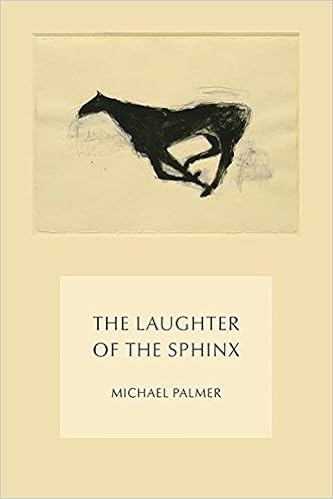
Editor�s Note  I�m using today�s Poems and Poetics to celebrate the publication of Michael Palmer�s new poetry collection, The Laugher of the Sphinx, just out from New Directions.  A great & thoroughly distinctive poet in his own right, Palmer in these poems shows his affinity & regard for two of the great ones who came just before him, & in �Light Moves� especially, the work �pointedly echoes and evolves from Mac Low�s 22 Light Poems� published several decades earlier. Along with this sense of contemporary & historical kinship, the lyric force of Palmer�s own later poetry is a turning that illuminates the power of the work (his & theirs) that came before & the work still to come.  The presence here of the attendant linkages is surely one of his greatest resources: �that company I always hear as I work, and for whom I write, and to whom I write.� (J.R.) 

Tomb of Aim� C�saire 

I mourned a person who turned out
not to be dead
Of that what is to be said 

Surgical noise of the city
Sentence and song under earth 

I wept for something lost
a dawn or a dusk or a thought
a thing that couldn�t be bought 

Sun throat cut
Woman removing a glove 

And the body at once naked
and veiled
waiting and waiting for what 

Coma Berenices above the bay
sea wrack beneath 

Speech of the bone
and of the polychrome wing
speech of the leaf descending 

and of the rubble in a ruined field
Words have their lives apart 

I mourned a person who turned out
not to have died
between a feral sky 

and a flooded shore where
a wave was frozen in mid-air

Light Moves 1 

Mineral light and whale light,
light of memory, light of the eye,
memory�s eye, shaded amber light
coating the page, fretted
light of anarchy, flare of bent
time, firelight and first light,
lake light and forest light,
arcing harbor light,
spirit light and light of the blaze,
enveloping blaze,
century�s fading light,
light of cello, voice, drum,
figures billowing along
horizon, aligned, outline.

Light Moves 2

Bright light of sleep, its
shortness of breath, its
thousand sexual suns, curved
and fretted light, lies of that light,
dark, inner light, its
whispered words:
Now beyond, now below,
this to left, this to right,
scarecrow in stubble field,
nighthawk on wire,
these to cleanse your sight.

Light Moves 3

Light through the Paper House
rippling across floors and walls,
across the words of the walls,
its paper tables, paper chairs,
its corners,
pale light by which it reads itself,
fills and empties itself,
and speaks.

Light Moves 4

Watcher on the cliff-head
in afternoon light, aqueous light,
watcher being watched
in the salt-silver light
amidst the darting of terns,
beach swallows and gulls,
between the snow of sand
and the transit of clouds,
keeper of thought or prisoner of thought,
watcher being watched,
snowman of sand,
anonymous man.

Light Moves 5

Night-sun and day-sun
twinned and intertwined,
light by a bedside,
cat�s eye by night,
owl light and crystal light,
endless motion of the light,
the rise and the fall,
the splintered flare,
churning northern lights,
phosphor, tip of iris,
gunmetal moon�s
far, reflected light,
oil sheen
on pelican�s wing.

Light Moves 6

And yet what have we done
where have we gone
sometimes in light sometimes not
traveling
we say the great world the small world
the fields
patched with yellow the sudden crows
the city�s streets
alone among others
the billowing streets
bodies crowding past
outlined by light.
What have we done
among the roads and fields
in the theater�s shadows and the theater�s light
so bright you cannot see
those watching beyond
in perfect rows in the dark.

(in homage to Jackson MacLow)

Friday, 11 November 2016

Gerry Loose: Eight Further Poems in Ogham Script with a Note on Poetics & Translation


Church of the 3 Brethren     Lochgoilhead


little saint of whitethorn
little quencher of wolf spark
welcome to the burial mounds
 
dear confessor of blood-red berries
sweet dweller of beehive cell
oaks make good gallow-trees
 
meagre
my heart
 
 
Blackwaterfoot, Arran, King�s Cave #1
 
son: to leave                                                                                                                                       
friend: to stroll among trees                                                                                                        
work: to ride horses                                                                                                                       
killing: to be swift                                                                                                                          
father: to shelter the hunted
 
Blackwaterfoot, Arran, King�s Cave #2
 
skinsilver birch                                                                                                                                    
rowan of pillage                                                                                                                                  
heather the udder brusher                                                                                                     
poplar the horse trembler                                                                                                            
oak of hill & adze                                                                        
answer
song
 
Scoonie, Fife
 
no name for        them
they grow deep within
tree proud bush proud
urgent    they   �re allies
though    they     groan
shrivel        in the hunt
still bigger than a horse
 
Abernethy
 
coltsfoot the apple that suckles                                                                                                      
sun hoof the vine that strangles                                                                                                  
sun horse the yew that sickens
 
Pool
 
manifold the wheel
honey bees dancing
blush of the dying
breath of horses
wood brands burning
warriors at the breast
trees green leafing
world wheel whirling
 
 
Inchyra

begin with honey
& fellowship of trees
one third of a spear
& a shroud

return salmon
return sun
return spring well
bees are dying
 
Mains of Afforsk
 
beauty�s a boast
& kinship with saplings
 
with a glow of anger
& warriors� gear
 
cherished hazel
& grace disappear
 
cypher unknown
& wisdom undone
 
 
NOTE.
 
Writes Gerry Loose, qua translator:
 
     �Ogham is the [rune-like] script used for inscriptions on stone during the 4th�8 th  centuries CE, in the earliest known form of Gaelic. It comprises strokes across or to either side of a central stem line and is found on monoliths mainly in Ireland, with a few in Scotland, mostly in Gaelic but some in conjunction with Pictish symbols, which may be in that language. ...
     �Ogham is also called the tree alphabet, since the name of a tree (or plant) has been ascribed to each Gaelic letter thus: beith, luis, nin � birch, herb, ash . . . & so on. An alphabet v�g�tal. ...
     �Whatever the method of reading this script, it is steeped in the secrecy of the literate over the non literate; it�s always regarded as the property of the high poets, the early medieval fili of Ireland, who would spend many years memorizing 150 varieties of ogham. With the above, it�s possible to see the poetic possibilities, whatever ogham script is used. ...
     �Because the letters on the inscribed stones are sometimes doubled up, I have used this for emphasis.  Because, also, not all words in Gaelic have precise English equivalents (for example seanachas has overtones of biography and of tradition and of genealogy and of history and of language) I have moved between phrase oghams to use words I think best work in a given poem. Where these will not do, I have used other, appropriate translations of the Gaelic, the stone and the landscape itself to make a viable English poem from the ogham.�
 
N.B.  Three additional Ogham poems can be found on Poems and Poetics for February 5, 2015.  Loose also notes that the titles of the poems posted above are all place names.