Wednesday, 24 August 2016

Norman Finkelstein: �Oppen at Altamont�

        
From N. Finkelstein, The Ratio of Reason to Magic: New & Selected Poems, Dos Madres Press, 2016

I
Thrownnesshe calls it
And indeed �everyone
turned very sharply
into himself or herself.
Kind of a masturbatory
atmosphere.�

And the music�
something we had never
heard before though surely
it had been heard before
long ago   �the songs�
are no one�s own�

                                                                                    Not his, surely not
                                                                                    his.  In red and black
                                                                                    this medieval prince,
                                                                                    troubador of darkness,
                                                                                    self-appointed but
                                                                                    delegated�allow me
                                                                                    to introduce him as he
                                                                                    introduced himself

                                                Easy as
                                                pie?  No!
                                                because it
                                                is witnessed
                                                we witness
                                                ourselves as
                                                he witnesses
                                                himself there
                                                in the cutting
                                                room

obscured by their long hair they seem
to be mourning�
But this is not prophecy
�on the massive spike the song
clangs� 

A spike not
a knife though one
may lead inevitably
to the other

                                                                 For one sees it in their eyes,
                                                                 their homely faces
                                                                 The girl cannot stop weeping
                                                                 and the boy in the cap
                                                                 looks up at him shaking his head
                                                                 knowing that something has gone
                                                                                           
                                                                               terribly wrong
                                           
                                         But to what degree
                                         does one withdraw from the stage?
                                         Oppen cancels his reading tour�
                                         �woke up one night in the absolute certainty
                                         that I could not do it�
                                         cannot, cannot, perhaps particularly
                                         with the expansion of voice in Numerous
                                         I cannot make a Chatauqua of it,
                                         cannot put myself so thoroughly INTO it,
                                         like a Ginsberg.�

                                         Who appears innocuous
                                         however unleashing
                                         energies comparable
                                         to what we see
                                         on the screen

                                         Who once invited
                                         the Angels to
                                         a Dylan concert, calling
                                         them �our outlaw
                                         brothers of the
                                         counterculture�

                                                                             The roiling mass
                                                                             and the naked woman
                                                                             cannot be otherwise
                                                                             than a Bacchante
                                                                             her rounded flesh lifted
                                                                             up and set back into
                                                                             the crowd by the Angels
                                                                             whose chief looks on
                                                                             at Jagger singing�
                                                                             products and producers
                                                                             of such powers

While the meditative man
confirms his failure
his victory in retreat
to �honorably keep
His distance
If he can.�

The populist caught
between the Old and New
past and present

The crowd, the �people�
organized by a vanguard
or newly individuated
always at risk
as power is unleashed

                                                                             Jagger helpless onstage:
                                                                             �If we are one
                                                                             let�s show
                                                                             we�re all one�

                                       What, what,
                                       we asked each other
                                       on the way to the museum,
                                       were they doing there?
                                       �It was necessary to park                                                                             
                                       one�s car and walk a mile.
                                       Nobody looked at my wife and me�
                                       Yet how odd they must have seemed
                                       to any of the festive youth
                                       unstoned and thoughtful
                                       there among �the irrigation
                                       canals�   �walking under the high-
                                       tension wires over the brown hills�

                                                                       And Charlie Watts,
                                                                       backbone of the band,
                                                                       stares out in reverie,
                                                                       murmuring of the way
                                                                       the Angels cleared the path
                                                                       to the stage

                                                                       Only much later
                                                                       are we shown
                                                                       the biblical painting
                                                                       the crowd parting
                                                                       as the bikes roar through

                                                                       In the computer�s freeze-frame
                                                                       it seems like Oppen�s
                                                                       migratory vision
                                                                       �the wounds untended
                                                                       and the voices confused�
                                                                       turned to nightmare

                                                At the press conference in
                                                some uncharted space
                                                between naivet� and cynicism
                                                Jagger speaks of �a sort
                                                of microcosmic society
                                                which sets an example to
                                                the rest of America
                                                as to how one can behave
                                                in large gatherings.�

                                                 Yet for Oppen too
                                                �The Students Gather�:
                                                �I too agree
                                                We are able to live
                                                Only because some things have been said�

                                                But who would not hesitate
                                                to speak
                                                knowing all
                                                speech may be corrupted?

                                                To identify death
                                                with a kind of ecstasy
                                                so that the crowd
                                                takes over in a darkness
                                                closely akin to joy

                                                Words lost
                                                in what he knew to be
                                                an endangered, dangerous
                                                show

                                                Not �the shuffling of a crowd�
                                                nor the ball game�s argument
                                                not even Williams� crowd
                                                seen as �beautiful,� �venomous�
                                                �deadly, terrifying�

�I know, of course I know, I can enter no other place�

 II

The space of possibility
is always limited:
the past is
because it has been
insofar as we
have been thrown
insofar as we
are fallen
insofar as we
may project ourselves
forward

                                    Always at some point
                                    they are running
                                    from or toward
                                    the helicopters

                                                                                    The Stones and
                                                                                    their entourage
                                                                                    lifted up and away
                                                                                    from disaster

                                    Or the fall of Saigon
                                    reenacted endlessly
                                    in a musical

                                                                                    Troopers playing
                                                                                    the same old songs

Oppen feels the wind
blowing through the century
The Collected Poems arrives�
the Angel of History in a cardigan
at the end of the continent
dissolving into language

                                    And that sickening acceleration
                                    that no poem may stop

                                                                   No arbitrary freeze-frame
                                                                   neither the Maysles nor mine
                                                                   can prevent this passage

                                                                   Poised to leave
                                                                   Jagger stares out at us forever

                                                                   Let him go

                                                                   The storm kicks up
                                                                   the credits roll

                                                                   We almost expect to see them
                                                                   walking back toward the car

 A note on �Oppen at Altamont�: George and Mary Oppen attended the Rolling Stones concert at Altamont on December 6, 1969; Oppen later wrote about the experience in his sequence Some San Francisco Poems. My poem quotes from the first poem in that sequence, as well as from the poems �Of Being Numerous� and �The Students Gather,� from Oppen�s interview with David Gitin in Ironwood 5, and from his letter to Charles Tomlinson (Oct. 1969) in the Selected Letters. I also draw on images and lines of dialogue from Gimme Shelter (1970), the Maysles Brothers documentary of the Rolling Stones tour that culminated with the Altamont concert. Additionally, the poem alludes to Heidegger�s philosophy (Oppen read Heidegger closely), specifically his notion of �thrownness.� The poem first appeared in Smartish Pace 16 (April 2009).

Sunday, 21 August 2016

Dennis Tedlock: Seven Poems from Alcheringa & Another from a Long Trip through Morocco


[Re-posted from a previous publication in Poems and Poetics, to mark Dennis Tedlock�s  unexpected passing earlier this year.  My admiration & debt to him � & that of so many others � is hardly in need of explanation, though the note below provides some of it. (J.R.)]

Advice Received

Don�t ask too many questions.
Don�t ask questions about religion.
Don�t take notes in front of people.
If someone is chopping wood
don�t just stand there.

Dialogue

- I could tell you a story.
It�s the story told to all boys when they are initiated.
Do you want me to it? -
- If you want to tell it go ahead. -
- Don�t say that.
Say you want me to tell the story.
 
The Hunter�s Wife

1/
She looks out the window
the snow is falling
her husband went hunting for elk
the boy went along too
a neighbor thinks he saw them at Red Hill
she hasn�t seen the sun all day.

2/
She was out in the woods
gathering pine nuts
and there
under a tree
was a fawn
the fawn said
- Tie me up. �
 

3

The men left her in camp for the day
a wounded buck
charged right into the fire
she hit him over the head with a frying pan.

When Only The Breath Is Left

On the third day after her grandson died
she thought she heard his
transistor radio playing
but that wasn�t even in the house
it was already
broken and buried.
On the fourth night
the door was left open for her grandson
she dreamed of masked dancers
in a row
she heard the cry of the deer
they all walked away
he was the one in the middle.

The Fire in Your Fireplace

You started it right up
with one match, it must be
your aunt loves you
it was quiet for awhile
but now
listen to that fire!
The flames go straight up
it roars!
Someone is hungry, it must be your
great-grandparents
every time you eat
take a little bread
a little meat
throw it in the fire, say
- Great-grandparents!
Eat! -
That�s the shortest prayer there is.

While Eating Mutton

Here are the eyes
but that means weak eyes
here is the fat around the eyes
but that means getting tears in the wind
here is the tongue
but that means getting thirsty all the time
here is the brain
but that means snoring all night
here is the heart
but that means forgetfulness
here is a bone with marrow in it
but that means hangnails
now here is the meat on the palate, with this
I�ll be able to eat cactus fruit.

Spiders

1/
A spider walked across the table
he lit a match and burned it
then he said
- Bluebird!
That handsome Bluebird!
He�s the one who killed you!
Shrivel up his eyes!

2/
A spider bit the girl
there were big red bumps down her arm
but her aunt knew the right medicine
it was the juice of the burnt Bluebird. 

*
 
Hamid�s Instructions for Travelers
as recorded by Dennis Tedlock

Give a kiss on both cheeks, then a handshake, then place your hand on your heart. If it�s someone you don�t know already, say, �Peace be with you.�

When looking left or right, do not turn your head. Shift only your eyes.

Eat out of the same dish with everyone else. Use your right hand only. If you feel it necessary, use a spoon.

Read from right to left, not left to right. Be very careful with vowels. Mispronounce a vowel and it changes everything.

When using European languages, combine them in any way that conveys your intended meaning. They are hard to tell apart anyway.

When you see the printed face of the king, look for the face of his dead father in the watermark.

The person who makes change for you will think more of you if you count it.

Put God and Satan at a great enough distance to leave room for genies. You are not required to mortgage your soul to get help. You own the genie; the genie doesn�t own you.

In the market, keep an eye out for unattended cobras. Beware of people who say they�ve seen you somewhere before. If you have a tooth pulled, know that the dentist will add it to his display. If you listen to a storyteller, know that the story will never end.

Do not ask to see more than one edition of the Book. They all say the same thing. The words in red are not quotations from the Prophet, but his name. At the airport, say you bought the Book for a believer. 

NOTE.  Dennis Tedlock�s work as one of the co-founders of contemporary ethnopoetics is internationally known & regarded as a singular achievement of twentieth & twenty-first century poetry.  By the time of our first meeting in 1970 Tedlock had already started his own pioneering work in what I soon came to call �total translation� � the still remarkable presentation in Finding the Center of spoken Zuni narrative performances as lineated compositions.  Afterwards, in the manner of true poetic innovators (& with a scholar�s skills to back that up), he created a new translation of the Mayan classic, Popol Vuh, that drew on the knowledge of contemporary Mayan speakers & his own study of Mayan language & culture.  This was followed by his translation of the ancient Mayan drama, Rabinal Achi,  & most recently his 2000 Years of Mayan Poetry has exposed for us the full range of Mayan writing from the earliest hieroglyphic inscriptions to the works of later writers using the Roman alphabet.  Sometimes overshadowed by these groundbreaking works, Tedlock�s own poetry forms a continuum with them, as in these poems, informed by his years of association with the Zunis in New Mexico & first published in Alcheringa, the journal of ethnopoetics that he & I published & edited in the 1970s.  (J.R.)

Wednesday, 17 August 2016

Coda: Eight Poems in Black, after Goya


[N.B. What began for me with 50 Caprichos after Goya & has continued with variations on �The Disasters of War� will end with this Coda, first sketched in Madrid 2007, in the shadow of his darkest, brightest works. (J.R.)]

1/
two women watch
a man    his hand
under his cloak
or in his pants    the act
that causes one
to grin, the other
wryly looking on
as in a dream

2/
a procession of
old whores & madams
toothless
bearing fardels
& a gallant
from a former time
lined up along the base
of a grey mountain
holy crones
& well-laced fathers
of the inquisition.

3/
A Pilgrimage for San Isidro

who but the dead
can scream so
with their eyes rolled back
their mouths
like black holes
whom a blind man leads
strikes a guitar
& to his left
two men in black
two women in half-white
without a face

4/
Saturn
devouring his sons
whites of his eyes
as brilliant as
the red blood flowing
from the severed
neck
blood on his hands
his penis hot
& throbbing

5/
man fighting man
with cudgels
drawing blood
a stream of red
across his face
& sinking
ever deeper
into the mud

6/
a poor dog
hidden in the brown
& yellow mud
that could be clouds
� the way they suffer
without sound �

7/
The Witches Sabbath (1)

Satan as a great
goat    black
& holding court
before a ring
of men & women,
too deformed
from watching
the small figure
crouching
covered with
white shroud,
& at the edge
a young boy,
almost cut
from sight
the only
gentle soul,
whose screaming
mother hollers
at the assembled
crones

8/
The Witches Sabbath (2)

red more brilliant
than her eyes,
the blanket set across
her mouth,
poor doll & witch,
& yet the eyes
are turning backwards
in her head,
the one who flies with her,
a rock between
his teeth, a tongue
made stone,
the yellow wind
spiking his hair,
who has no choice
but points a finger
at a hill in space,
a city on a hill,
that vanishes.
Nothing has changed
since then,
try as we will,
nor will it please you,
friend & father,
the ragged soldiers
aiming guns,
the line of pilgrims,
barely seen,
circling the lonely fell,
the old witch
like a sibyl
arisen from your dream
ready to tell it all.
 
* Originally published in J.R., Concealments & Caprichos, Black Widow Press, 2008.

Thursday, 11 August 2016

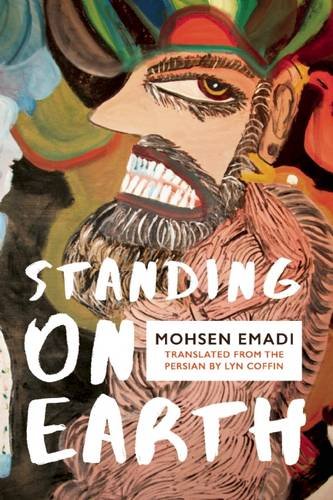
Mohsen Emadi: Two Poems from �Standing on Earth�


Translation from Persian by Lyn Coffin

laws of gravity 

I
On your planet, an apple falls from the tree
and Newton discovers the laws of gravity.

On my planet, the telephone rings.
Newton picks up the receiver,
is hurled into the air,
and gets stuck in the branches of a tree.
I prefer to sit
on the principles of natural philosophy
and bite
floating apples--
which is to say
I want to weep a little.

II
a street where no dog barks
is a dead street
the dogs with lolling tongues
pant
and grab the pants of a passing poet
the poet takes off his pants
and his shirt
and naked as the day he was born
escapes into the world
the dogs bark
and run from one street to another
a poet who forgets all his words doesn't have any weight
he turns into a straw in the wind.
The wind howls in the howling of the wolves
The wolves escape in the snow
which is burying the streets.

 
Newton's Elegies

Stones were blocking the river's way.
I was carrying fish in my hands
in the restlessness of bodies
in the turbulence of a pail going up the valley
to the pool inhabited by the hungry look of cats.
The stones were your eyes
the fish, the words of my sonnets
that in the year of the earthquake
were joined to the four elements.
the hair of Newton was covered with pebbles
the hair of Newton was smeared with mercury
the vapor of mercury was poisoning the paper
it was killing kings. 

Newton was the acceleration of fish in the restlessness of
      the pail
in which he wanted to take stones from the river
and the earth was heavy
and his words became fish
his hair turned to poison.

sad eyes
joking eyes
covered by moss
next to each other on each other
form the walls of a prison
where the second law of Newtonis being tortured
I was exiled to the first law
where neither the sound of breathing on the telephone
nor the calm growth of moss under contact lenses
      could reach--
just the solidifying voice of Newton
and the clots of blood on the surface of the prison
      wrote me.
Mercury is the struggle of eternity
stone is the age of earth in the second law of Newton,
the law condemned by the relativity of your eyes
that is released from Dachau
and scatters in the galaxy along with the Berlinwall.
Sad eyes
joking eyes
hang from the hair of Newton
in my abyss
the language.

With the first kiss
language attains
universal dimensions:
kisses build on the third law of Newton
a temple
which, later,
falls on Hiroshima.
The lips of cold wars
the lips of geography�
Mercury trembles in the mirror.
A pail of water
has been thrown on my image
The fish
are stuck to the magnet of my body.
The meat-eating fish
the small fish of the pool
are swimming within my borders
Their eyes are stones in the mirrors
the eyelids of the void
the eyelids of oblivion
O, solitude of Newton on the lips of women
O, vapor of mercury in the lullabies of mothers
O, philosopher's stone and tear gas.

Night sits back against the salt licks.
The moon shakes off the footsteps of astronauts
and your eyes overflow with time.
Your tears pass
from Newton's nightmares
into my poems
the words in a river of tears
hatch.

O, the cold shroud of the paper
O, the white eternity
O, the absolute snow.

[Reprinted from M. Emadi, Standing on Earth, recently published by Phoneme Media, Los Angeles.]

Born in Iran, Mohsen Emadi is the award-winning author of four collections of poetry published in Iranand Spain. He has also translated numerous collections of poetry. Emadi studied Computer Engineering in Sharif University of Technology in Iranand Digital Culture at the Universityof Jyvaskyla in Finland. He is the founder and manager of Ahmad Shamlou's official website, and The House of World Poets, a Persian anthology of world poetry featuring more than 500 poets from around the world. He was awarded the Premio de Poesia de Miedo in 2010 and IV Beca de Antonio Machado in 2011. Emadi has lived in Iran, Finland, the Czech Republic, and Spain, and is now based in Mexico City.
     In an accompanying statement to Emadi�s new book, Nathalie Handal writes: �Standing on Earth by Mohsen Emadi is a suddenness of echoes mooring us to the mystical within. The poems witness sorrow lifting, a nation sinking, and breath colliding with itself. A solitude lingers at the heart of each line. A profound reflection. An infinite sigh. This collection, lyrical and imagistic, where between death and silence is remembrance, where shadow after shadow resides, �whispers: guess who it is�� And the poet leaves us wondering because it is wonder that takes us closer to love's many versions, to an intimacy weaved in nation and exile. The poems in this unforgettable collection ground us, and give us flight."

Wednesday, 3 August 2016

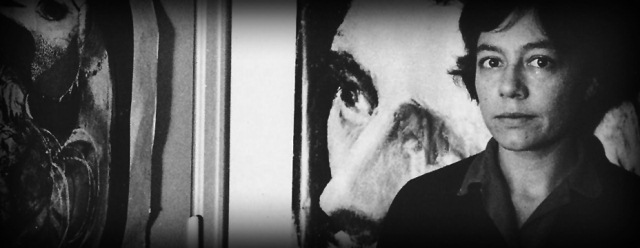
Alejandra Pizarnik: �The Incarnate Word,� An Essay on Antonin Artaud and Others (1965)

 
Translation from Spanish by Cole Heinowitz 

I blame the men of this age for causing me to be born by the most infamous magical maneuvers into a world I wanted no part of, and for trying by similar magical maneuvers to prevent me from making a hole in this world in order to leave it. I need poetry to live, and I want to see it around me. And I do not accept the fact that the poet who I am was committed to an insane asylum because he wanted to realize his poetry in its natural state.[i]
Antonin Artaud, Letters from Rodez

That assertion of H�lderlin�s, that �poetry is a dangerous game,� has its real equivalent in several famous sacrifices: the suffering of Baudelaire, the suicide of Nerval, the premature silence of Rimbaud, the mysterious and ephemeral presence of Lautr�amont, the life and work of Artaud�
            These poets, and a few others, are linked by having annulled�or having tried to annul�the distance society imposes between poetry and life.
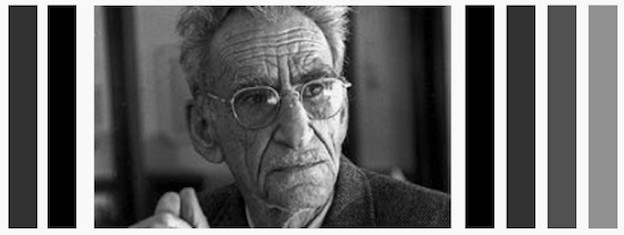
            Artaud still hasn�t entered university curricula, as is the case with Baudelaire. So it�s appropriate, in this precarious note, to appeal to a mediator the caliber of Andr� Gide�s, whose testimony gives a good account of the convulsive genius of Artaud and his work. Gide wrote this text after that memorable evening, January 13, 1947, at the Vieux Colombier, where Artaud�recently released from the asylum at Rodez�tried to explain himself with�but it couldn�t be �with,� rather �before��the others. This is the testimony of Andr� Gide:

            �In the back of the auditorium�that dear old auditorium of the Vieux Colombier that could hold about 300 people�there were half a dozen pranksters who had come to the event looking to have a laugh. Oh! I still think their insults could have gotten them locked up by Artaud�s fervent friends, scattered throughout the auditorium. But no: after one very timid attempt at a ruckus there was no need to intervene. ...We were present at an astonishing spectacle: Artaud triumphed, deflecting the mockery and insolent jeers; he dominated �
            �I had known Artaud for a long time, both his anguish and his genius. Never before had he seemed more admirable to me. Nothing remained of his material being but expression. His tall, gangly silhouette, his face consumed by an internal flame, his hands flailing like a drowning man�s, now stretched toward some unreachable aid, now twisted in agony, but most often clasped tightly over his face, alternately hiding and revealing it�everything in him displayed the horror of human misery, a damnation without appeal, with no possible escape but a furious lyricism which only reached the public in bursts of obscenity, imprecations, and blasphemy. Here, without a doubt, we encountered the astonishing actor this artist could turn himself into: but it was his own person he offered to the public in a kind of shameless farce that disclosed a total authenticity. Reason fled in defeat, not only his own but that of the entire audience, all of us, spectators at that hideous drama, reduced to the roles of malevolent stage extras, jackasses, and yokels. Oh, no! No one in the audience wanted to laugh anymore; and what�s more, Artaud extinguished our desire to laugh for a long time to come. He had forced us into his tragic game of revolt against everything that we accepted but that he, who was purer that we, permanently refused: 

                        We haven�t been born yet.
                        We aren�t in the world yet.
                        There isn�t any world yet.
                        Things aren�t made yet.
                        The reason for being hasn�t been found yet�

            �At the end of that memorable event, the public was speechless. What could they have said? They had just seen a miserable man, brutally beaten by a god, as if on the threshold of a deep cavern, the secret den of the Sybil where nothing profane is tolerated, or rather, they had seen, as if on a poetic Mount Carmel, the vates stripped naked, offered up to the storm, to birds of prey, at once victim and priest�And we felt ashamed to take up our places again in a world where comfort consists of compromise.�[ii]

A writer who signs himself �The Alchemist,� after tracing a convincing parallel between Arthur Rimbaud and Antonin Artaud, discerns in their works a white period and a black period, separated in Rimbaud by the �Letter of the Visionary� and in Artaud by �The New Revelations of Being� (1937).
            What is most astonishing about Artaud�s white period is his extraordinary need for incarnation, while in the black period there is a perfect crystallization of that need.
            The writings of the white period, be they literary, cinematic, or theatrical, all attest to that prodigious thirst to liberate and restore to the living body that which remains imprisoned by words.
            I entered the world of literature writing books in order to say that I could write absolutely nothing; when I had something to say or write, thought was what abandoned me the most. I never had ideas, and two or three little books of sixty pages each revolve around this deep, inveterate, endemic absence of all ideas. They are The Umbilicus of Limbo and The Nerve Meter.
            It is particularly in The Nerve Meter that Artaud describes the narcotically confused state (and it�s painfully ironic to be unable to stop admiring the magnificent �poetry� of this book) of his language in relation to thought. His central wound is internal paralysis and the hideous privations that result from it: the inability to feel the rhythm of his own thought (in its place lies something that has always been shattered) and the inability to feel that human language is alive: All the terms I choose to think with are for me TERMS in the proper sense of the word, absolute terminations�
            There is a word Artaud repeats throughout his writings: effectiveness. It is closely related to his need for metaphysics in action, and as used by Artaud it means that art�or culture in general�must be effective in the same way that our respiratory system is effective: I don�t believe the most urgent task is to defend a culture whose existence never freed a man from concerns about living a better life or going hungry, but rather to extract from this so-called culture ideas whose vital force is the same as that of hunger. And if you ask what that consists of, at the level of poetry, that effectiveness Artaud desired as nobody else and found as nobody else, this statement from Marcel Granet (Chinese Thought) may be a useful response: To know the name, to say the word, is to possess the being or create the thing. Every beast is tamed by the man who knows how to name it�I have tigers for soldiers if I call them: �tigers!�
The principle works of the black periodare: A Journey to the Land of the Tarahumaras; Van Gogh: The Man Suicided by Society; Letters from Rodez; Artaud the M�mo; Indian Culture and Here Lies; and To Have Done with the Judgment of God.
They are indefinable works. But to explain why something is indefinable may be a way�perhaps the noblest way�of defining it. This is what Arthur Adamov does in an excellent article in which he lays out the impossibilities�which I sum up here�of defining Artaud�s work:

Artaud�s poetry has almost nothing in common with poetry that has been classified and defined.
The life and death of Artaud are inseparable from his work to a degree that is unique in the history of literature.
The poems of his last period are a kind of phonetic miracle that ceaselessly renews itself.
One cannot study Artaud�s thought as if it had to do with thought since what Artaud forged wasn�t thinking.
 
Many poets rebelled against reason in order to replace it with a poetic discourse that belongs exclusively to Poetry. But Artaud is far from them. His language has nothing poetic about it even though a more effective language doesn�t exist.
            Given that his work rejects both aesthetic and dialectical judgments, the only key that can provide a reference point is the effect it produces. But this is almost impossible to speak of since the effect is the equivalent of a physical blow. (If one asks where such force comes from, the answer is, from the utmost physical and moral suffering. The drama of Artaud is that of us all, but his defiance and his suffering are of an unparalleled intensity.) Reading the late Artaud in translation is like looking at reproductions of Van Gogh�s paintings. And this, among many other causes, is due to the corporeality of the language, to the respiratory stamp of the poet, to his absolute lack of ambiguity.

Yes, the Word was made flesh. And also, and above all in Artaud, the body was made word. Why then his old lament over his separation from words? Just as Van Gogh restores to nature its forgotten nobility, and to manmade things their maximum dignity, thanks to those sunflowers, those old shoes, that chair, those ravens�so too, with identical purity and identical intensity, the word of Artaud, that is to say Artaud himself, rescues �humanity�s abhorrent misery� by incarnating it. Artaud, like Van Gogh, and very few others, leaves us works whose primary difficulty is rooted in the place � inaccessible to almost everyone � where they were made. Any approach to them can only be real if it takes the terrifying roads of purity, lucidity, suffering, patience�

� returning to Antonin Artaud after his ten years of misery, to begin to glimpse what he meant, what this sign cast among us means, perhaps the last one worth deciphering ...                    

[N.B. Eight poems of Pizarnik�s, also translated by Heinowitz & with additional commentaries & bio notes, appeared earlier on Poems and Poetics& Jacket2.  "The Incarnate Word" was first published in the journal Sur (Buenos Aires, no. 294, May-June, 1965) and republished as the Prologue to Pizarnik's translations of Artaud, Texts of Antonin Artaud (Buenos Aires: Acuario, 1972).]


[i] Trans. Helen Weaver. Antonin Artaud: Selected Writings. Ed. Susan Sontag. UC Press, 1976. p. 455. Excerpted from a letter to Henri Parisot, October 6, 1945. 
[ii] Andr� Gide, �Antonin Artaud,� March 1948.